By Jeff Myers
For more than a decade, a large network of people and organizations operated across the United States with a singular mission to transform our public education system, and they were very successful at it. These were, for the most part, not people who were elected to take on this mission, nor was their mission up for public debate. They simply decided their vision for our society was right, and they took it upon themselves to make it a reality. There were a few “bumps” along the way, as they were involved in creating and participating in many education-related controversies such as:
- Critical Race Theory and its journey from “it’s only in law schools” to “we’re just teaching real history”
- COVID-19 lockdowns, return-to-school protocols, and billions of additional funding
- Attacks on school choice / education vouchers
- Framing parental rights as racist and anti-LGBTQ+
- Condemning outspoken parents as domestic terrorists
- Identity, mental health, Social Emotional Learning, Restorative Justice, overwhelming data collection, [fill in the blank] justice, and more
While their goals were not grounded in evidence but in ideology instead, I think they deserve some recognition. They built and ran an incredible machine for change (their network). They were extremely well funded, focused, organized, and connected. Also, they operated for 11 years, from 2015 to April 2016, and this is likely the first time you’ve heard about them: the Partnership for the Future of Learning (PFL).
Who was involved?
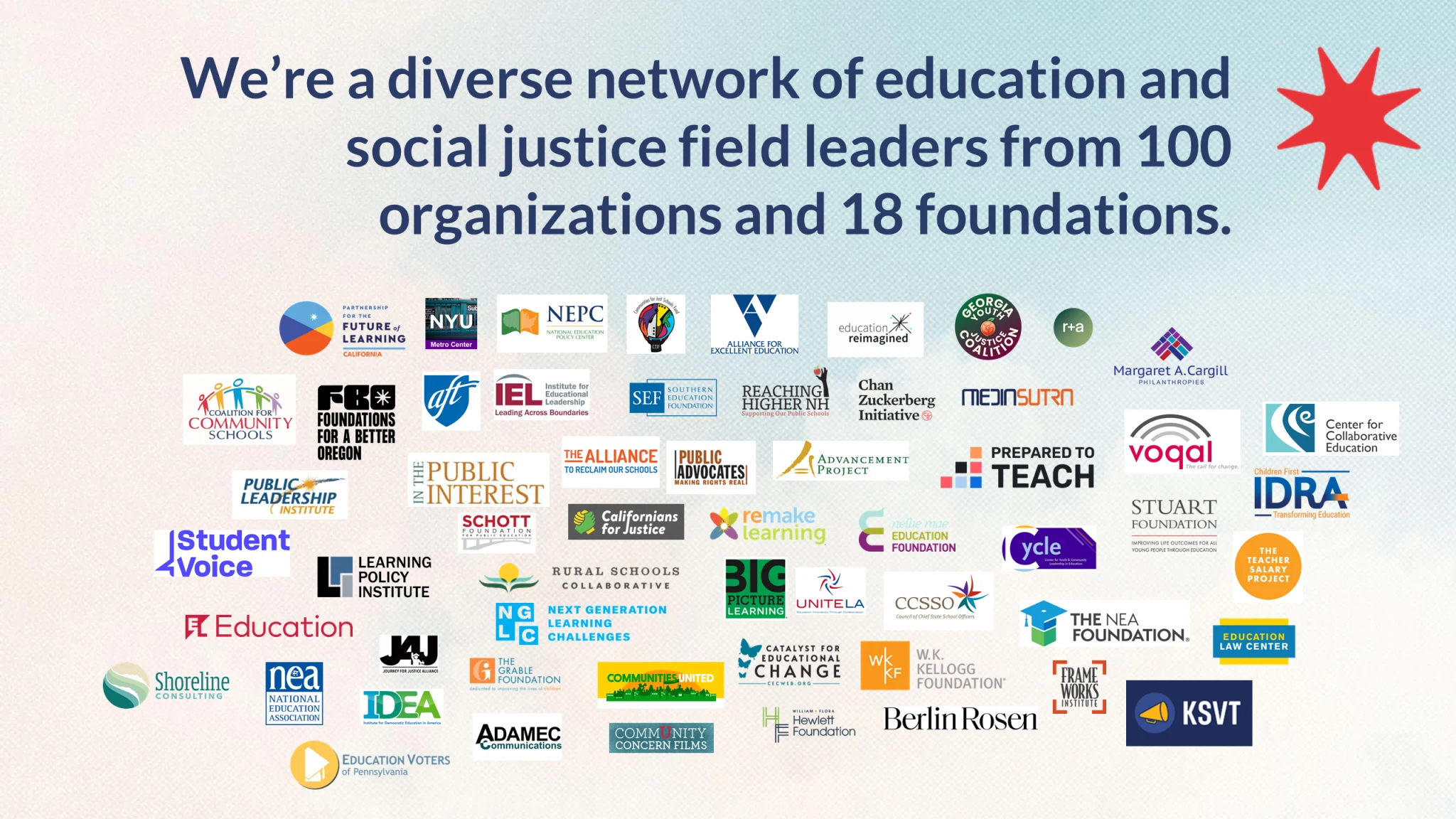
While their membership in this network may be new to you, some of the people and organizations may be familiar names to you. At their highest point there were roughly 900 people across 400 organizations. Here are just a few examples:
- Billionare-backed nonprofit foundations (Gates Foundation, Chan Zuckerberg Initiative, and Hewlett Foundation)
- Teachers unions (National Education Association, American Federation of Teachers, and many state & local affiliates)
- Public officials at various levels of government (U.S. Department of Education, White House, state departments of education, school districts, and legislators)
- Professors and administrators in public and private institutions (NYU Metro Center, Teachers College at Columbia University, Harvard, Stanford, and UCLA)
Would you like to see every person and organization in the PFL? How about watching some of their internal virtual meeting recordings? Or maybe you’d like to dive into their detailed plans in George, California, and New Hampshire? All of that and more are available right now on this website: PFLExposed.com. See the the bottom of this post for more details.
What was their vision for our education system?
This is where things get a bit tricky. They were adept at using affirmative (positive) language and redefining common terms to sound appealing. They used terms like “deeper learning”, “student-centered approaches”, “equitable and inclusive education”, and “democracy”. As you can imagine, their messaging would have raised more eyebrows if they had said something closer to the truth, such as:
“We think it’s time to ditch capitalism and individualism and move our society to socialism and pluralism. Just trust us and don’t ask questions or we’ll call the FBI on you.”
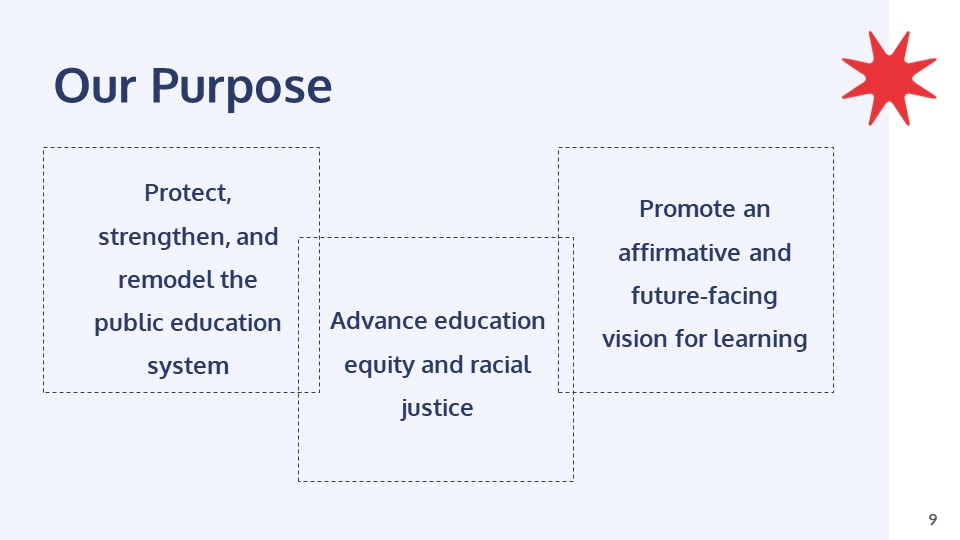
While the PFL did get involved in many things over their 11 years in existence, their top priority never wavered from Community Schools. Many PFL members produced or contributed to resources on this topic, including this one from the National Education Association: NEA – What are Community Schools?
Community Schools are a topic deserving of an entire post, which is forthcoming. In short, Community Schools aren’t really schools. They are community hubs, providing social services like healthcare, mental healthcare, food, housing, and other social programs for students, families, and other community members.
Community Schools would still provide learning opportunities, but well beyond the traditional grade span of kindergarten through high-school. They would provide education for all ages, at different times of course. Some of these things may sound appealing, but as always, the devil’s in the details.
No school can make the leap from a traditional school to the full Community School model in a single year. They often start by opening a school-based health center in one or two locations across the district, dedicating space in schools for a clothes closet or food pantry, hiring social workers, or partnering with a nonprofit to offer after-school and other services. Just know that if you’re seeing one or more of these pop up in your school district, it’s likely because they’ve begun to adopt this Community Schools model.
How did they drive all these changes?
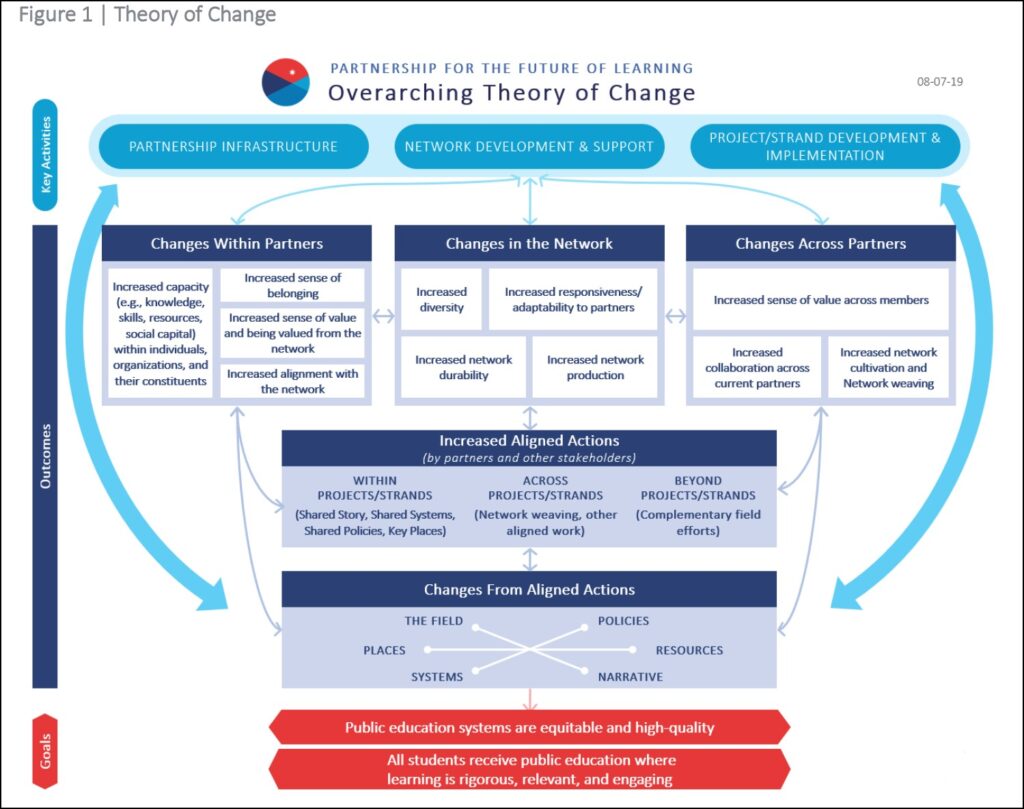
This is really where the PFL flexed their collective muscles. They had a core team of staff and consultants, led by a Saul Alinsky (author of Rules for Radicals) trained organizer named Cyrus Driver. This team operates as a project within their “fiscal home”, a 501c3 non-profit (originally the National Public Education Support Fund but they moved to Rockefeller Philanthropy Advisors in 2022). This gives them access to plenty of tax exempt funding without having to disclose anything specific about their “project”, how it uses the money, etc.
Cyrus and his team leverage this well-funded, well-connected network of people to execute a laser-focused strategy laid out by their Steering Committee of about 15 people (see 2020 roster and 2023 roster). Their strategy involves specific goals and tactics including:
- Communications / public relations
- “Narrative framing” (i.e. defining the problem and why their solution is good and others are bad)
- Public policy and legislation
- Land and expand (i.e. growing their reach through state/regional partnerships)
- Promoting and controlling “student voice”
- And most recently, how to “Power a breakthrough for public education” (aka their proactive push against education freedom/school choice, parental rights, and people or groups who disagree with them)
Long story short, they’ve established an incredible system to drive change across the country while making us all think these were just honest, grassroots efforts.
Why are they doing this?
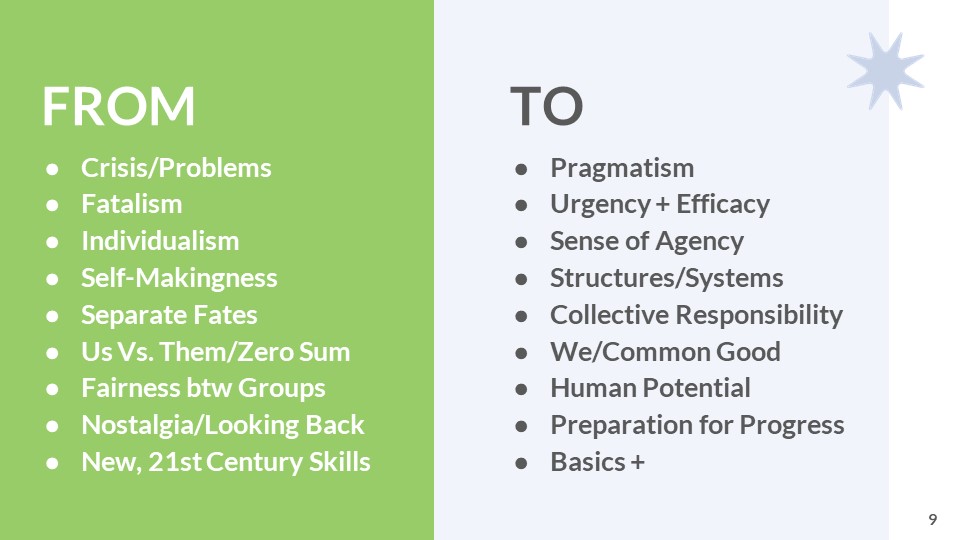
It’s pretty simple. They believe our society is broken and it’s their duty to fix it, whether we like it or not. As you begin to recognize who they are and their work, you’ll notice some consistent themes like:
| Bad | Good |
|---|---|
| Capitalism | Socialism |
| Individualism | Collectivism |
| Patriotism | Globalism |
Here’s just one example taken from their June 2020 Community Schools Framing and Messaging presentation delivered by Jennifer Kotting, another of the core PFL team members:
Choose your own adventure
I realize this likely generates more questions than provides answers, but I believe it speaks to the size and scope of the PFL. This is just the first in a series of posts that I hope will be useful to those seeking answers.
This network of activists accomplished a stunning amount of “transformational change” over the 11 years they were in operation. I’ll do my best to guide you on the path to understanding the who, what, why, when, where, and how. Using their own documents and videos, you’ll see how these so-called protectors of democracy were consistently circumventing our democratic processes to push the Community Schools model and their other goals.
For those who are skeptical or want to dive into the data for themselves, I’m publishing all of the PFL’s records and information on PFLExposed.com. That includes:
- Document Library: Over a thousand internal documents, presentations, emails, message board posts, and more.
- Videos: Recordings of their internal meetings and webinars
- People Database: View details for every person in the PFL, including who they worked for, when they joined the PFL, links to relevant content, and more
I will continue to write more posts to tell the PFL’s story as well as publish more records as I obtain them. If you have any information to share or have any questions, you can submit them on the Contact page.
Finally, please consider sharing this with others. Thank you!